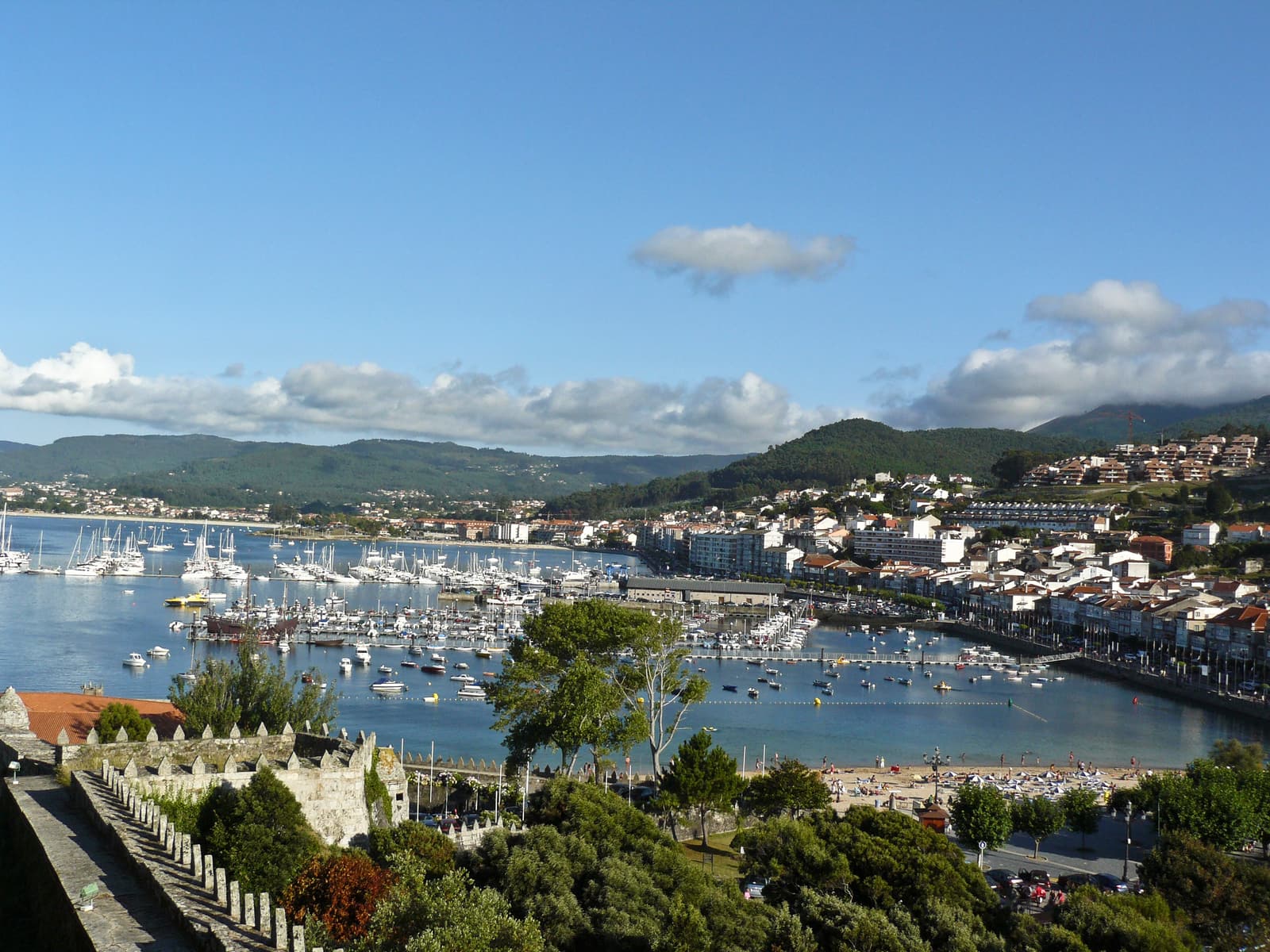
Baiona has an Atlantic climate: mild winters, warm but rarely hot summers, and a lot of rain between October and April. That rain is why Galicia is green, and why locals treat a clear day as something to be used.
The short answer: June and September give the best balance of weather, sea and space. July and August are the most reliable and by far the busiest. Winter is quiet, cheap and often wet, with one spectacular exception in early March.
The seasons at a glance
| Season | Weather | Crowds | Good for |
|---|---|---|---|
| Spring (Mar–May) | Mild, changeable, showers; highs in the mid to high teens °C | Low, except Arribada and Easter | Festa da Arribada, walking, wildflowers, the first Cíes boats around Easter |
| Early summer (Jun) | Warm and increasingly dry; highs in the low 20s °C | Moderate | Cíes Islands without the crush, long evenings |
| High summer (Jul–Aug) | Driest and warmest; highs in the mid 20s °C, occasional fog | Very high | Beaches, boats every day, fiestas |
| Early autumn (Sep–early Oct) | Still warm, sea at its warmest, rain returning | Moderate, then low | Swimming, wine harvest, calmer islands |
| Late autumn & winter (late Oct–Feb) | Mild and wet; highs around 13–15 °C, Atlantic storms | Very low | Storm-watching, seafood, low prices |
Rain: what to expect
The Rías Baixas are among the rainier parts of Spain, with most of the year’s rain falling between October and January. Wet spells arrive as Atlantic fronts and can last several days; between them the light is extraordinary. Summer is a different story — July and August are usually the driest months, though a grey morning that clears by lunchtime is common.
Sea temperature
The Atlantic here is cold. The sea is at its warmest in late summer and early autumn, when it typically reaches the high teens Celsius; in early summer it can feel much colder, especially after northerly winds bring up deep water. The sheltered beaches inside the bay are a little kinder than the open coast.
The Cíes Islands season
Regular boats to the Cíes run mainly around Easter and from late spring to early autumn, with daily sailings in July and August and a reduced service on the shoulder weekends. In the main season you also need the Xunta de Galicia’s free visitor authorisation. The exact dates are set each year — see our Cíes Islands guide and check before you book flights around an island day.
Festivals worth planning around
- Festa da Arribada (first weekend of March): the biggest event of the year. Expect crowds, costumes and full hotels — and quite possibly rain.
- Easter: processions, the first busy weekend of the year and, usually, the first island boats.
- Curros in the Serra da Groba (late spring and early summer): the wild-horse round-ups in the hills above the coast.
- August: Baiona’s main summer festivities and peak season.
- Late November to early January: Vigo’s famous Christmas lights, half an hour away.
Crowds and prices
Baiona is primarily a Spanish holiday town, and its season is short and sharp: from mid-July to the end of August beaches, car parks and restaurants are full and hotel rates are at their highest. In June and September the same hotels cost noticeably less and you can get a table without booking. From November to February some hotels and restaurants close for a break.