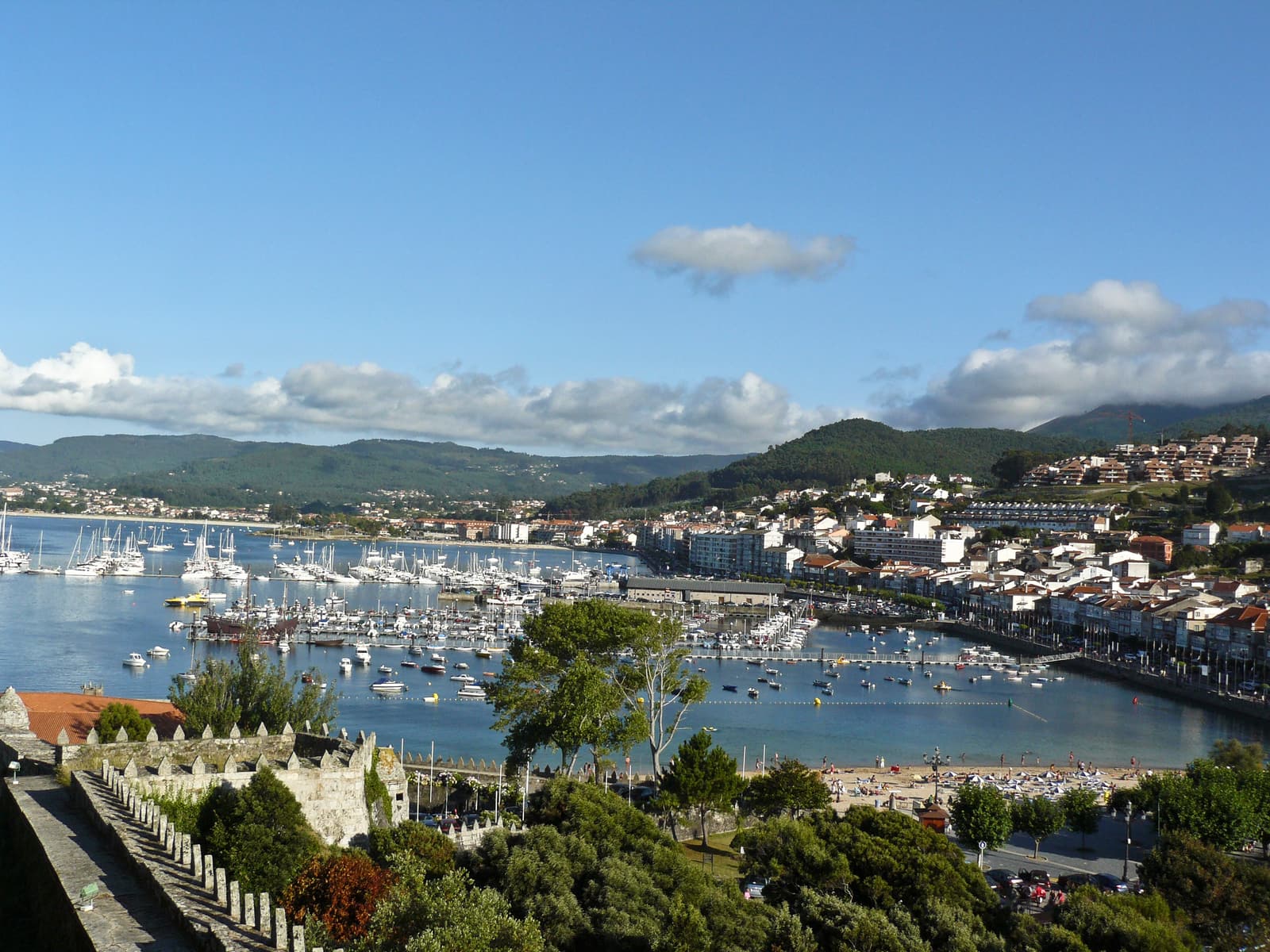
Baiona lies at the south-western tip of Galicia, about 25 km from Vigo and some 35 km by road from the Portuguese border at Tui. It has no railway, so however you travel, the last leg is by road — usually through Vigo.
These are the main ways in, compared.
The options at a glance
| How | Journey time | Rough cost | Best for |
|---|---|---|---|
| Fly to Vigo (VGO) + taxi or hire car | About 35–40 min by road | Taxi fares vary — ask before you set off | Arrivals from Madrid, Barcelona and other Spanish cities |
| Fly to Porto (OPO) + hire car or bus via Vigo | About 1.5 h by car; 3 h or more by bus | Car hire + tolls, or two bus tickets | International visitors — far more flights |
| Fly to Santiago (SCQ) + car or train to Vigo | About 1 h 15 min by car | Car hire + tolls | Combining Baiona with Santiago |
| Train to Vigo + bus | Bus leg 45–60 min | Low — check current fares | Travellers without a car |
| Bus from Vigo | 45–60 min | A few euros | Day-trippers and car-free visitors |
| On foot: Camino Portugués da Costa | One stage from Oia or A Guarda | Free | Pilgrims |
1. Fly to Vigo (VGO)
Vigo-Peinador airport is the nearest, about 35 km from Baiona on the far side of the city. It is a small airport served mainly by domestic flights — Madrid and Barcelona above all — with some seasonal routes; schedules change, so check what is running for your dates.
From the airport, a taxi or a hire car takes around 35–40 minutes via the city ring road and the AG-57 motorway. By public transport, take the city bus into Vigo and change to the Baiona bus.
2. Fly to Porto (OPO)
For most international visitors, Porto’s Francisco Sá Carneiro airport is the practical gateway: it has far more routes, including long-haul and low-cost flights. Baiona is roughly 125 km north — about an hour and a half by car on the Portuguese A3 or A28 motorways and the Spanish A-55. Portuguese motorways use electronic tolls; ask your hire company how they are charged, and confirm that you may take the car across the border.
Without a car, direct coaches link Porto airport and Porto city with Vigo in around two hours or a little more, and you change there for Baiona. Remember that Portugal is one hour behind Spain.
3. Fly to Santiago de Compostela (SCQ)
Santiago’s airport is about 115 km north, around an hour and a quarter by the AP-9 toll motorway. It is a good option if you want to see Santiago too. By public transport, take the bus into Santiago and a train to Vigo.
4. By train to Vigo
Vigo has two stations. Vigo-Urzáiz handles the fast services along the Atlantic corridor from Santiago and A Coruña and the long-distance trains from Madrid. Vigo-Guixar handles regional trains and the cross-border Celta service from Porto. From either, you need the bus or a taxi for the last 25 km.
5. By bus from Vigo
Interurban buses run between Vigo and Baiona throughout the day, via Nigrán and A Ramallosa, and take roughly 45 minutes to an hour depending on the route and the traffic. They are part of the Xunta de Galicia’s public transport network; timetables and stops change from time to time, so check the current ones on the Xunta’s transport website or at Vigo bus station before you travel. In Baiona the buses stop on the seafront, close to the old town.
6. By car
From Vigo, the AG-57 toll motorway reaches Baiona in about 25–30 minutes. The toll-free alternative is the PO-552 coast road through Nigrán, which is slower and busy on summer weekends. From Portugal, cross at Tui–Valença and follow the A-55 towards Vigo, or take the slow, spectacular coast road from A Guarda through Oia.
Parking in Baiona is the main headache. There are pay car parks along the seafront and by the harbour, but they fill by late morning in July and August and on fine weekends. Arrive early, or choose a hotel with parking.
7. On foot: the Camino Portugués da Costa
Baiona is a stage town on the coastal variant of the Portuguese Way to Santiago. Pilgrims arrive from A Guarda or Oia along the ocean, cross the town and continue towards Vigo over the medieval bridge at A Ramallosa. From Baiona to Vigo is a day’s walk of about 25 km; at Redondela the coastal route joins the main Portuguese Way.