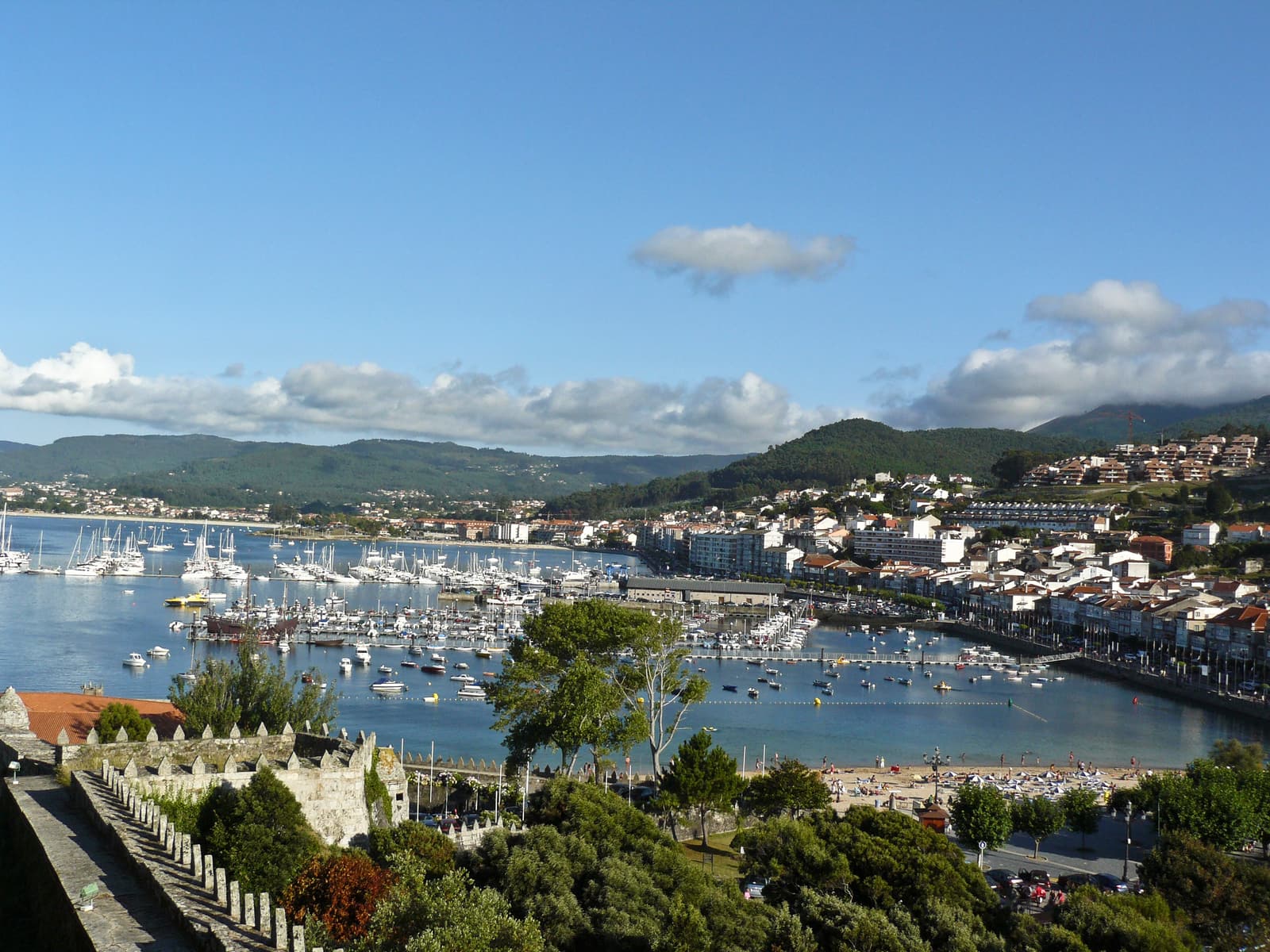
Baiona is a small town with a long memory and a big backyard. This guide covers its history, how long to stay, what to eat, how to use the town as a base and how to plan around the Atlantic weather.
A short history
The headland of Monte Boi has been settled and fortified since antiquity, and the town at its foot received a royal charter in 1201. In the Middle Ages Baiona was one of the busiest ports in Galicia, trading wine and salt and suffering regular attacks from the sea.
Its great moment came on 1 March 1493, when the caravel La Pinta, under Martín Alonso Pinzón, put in here after being separated from Columbus in a storm — making Baiona the first place in Europe to learn of the voyage to the Americas. In 1585 the town beat off an attack by Francis Drake. Later, as Vigo grew, Baiona slipped into a quieter life of fishing, and in the 20th century it reinvented itself as one of Galicia’s favourite summer resorts. The fortress became a Parador in 1966 and the old town was declared a historic-artistic site in 1993.
How long do you need?
- A day trip — the ramparts, the replica of La Pinta, the old town and lunch. Easy from Vigo.
- Two to three nights — the version we recommend: add the Cíes Islands and the coast road to Oia and A Guarda.
- Five nights or more — add Tui and Valença, Vigo, the Albariño wineries and some proper beach time.
What to see
In town: Monterreal fortress and its wall walk, the replica of La Pinta, the old town with the Virxe da Roca above it, and the beaches. Beyond: the Cíes Islands, Cabo Silleiro and Oia, A Guarda and Monte Santa Trega, Tui and Valença, and Vigo.
Costs at a glance
| Item | What to expect |
|---|---|
| Monterreal fortress grounds | A small entrance fee in season; the seaside path is free |
| Replica of La Pinta | A small entrance fee |
| Virxe da Roca (climb inside) | A small fee, when open |
| Baiona walking tour | From around US$21 per person |
| Cíes Islands ferry from Vigo or Cangas | From around US$30 return |
| Winery visit with tasting | From around US$17 |
| Shellfish (percebes, lobster) | Priced by weight and season — ask first |
 In Baiona
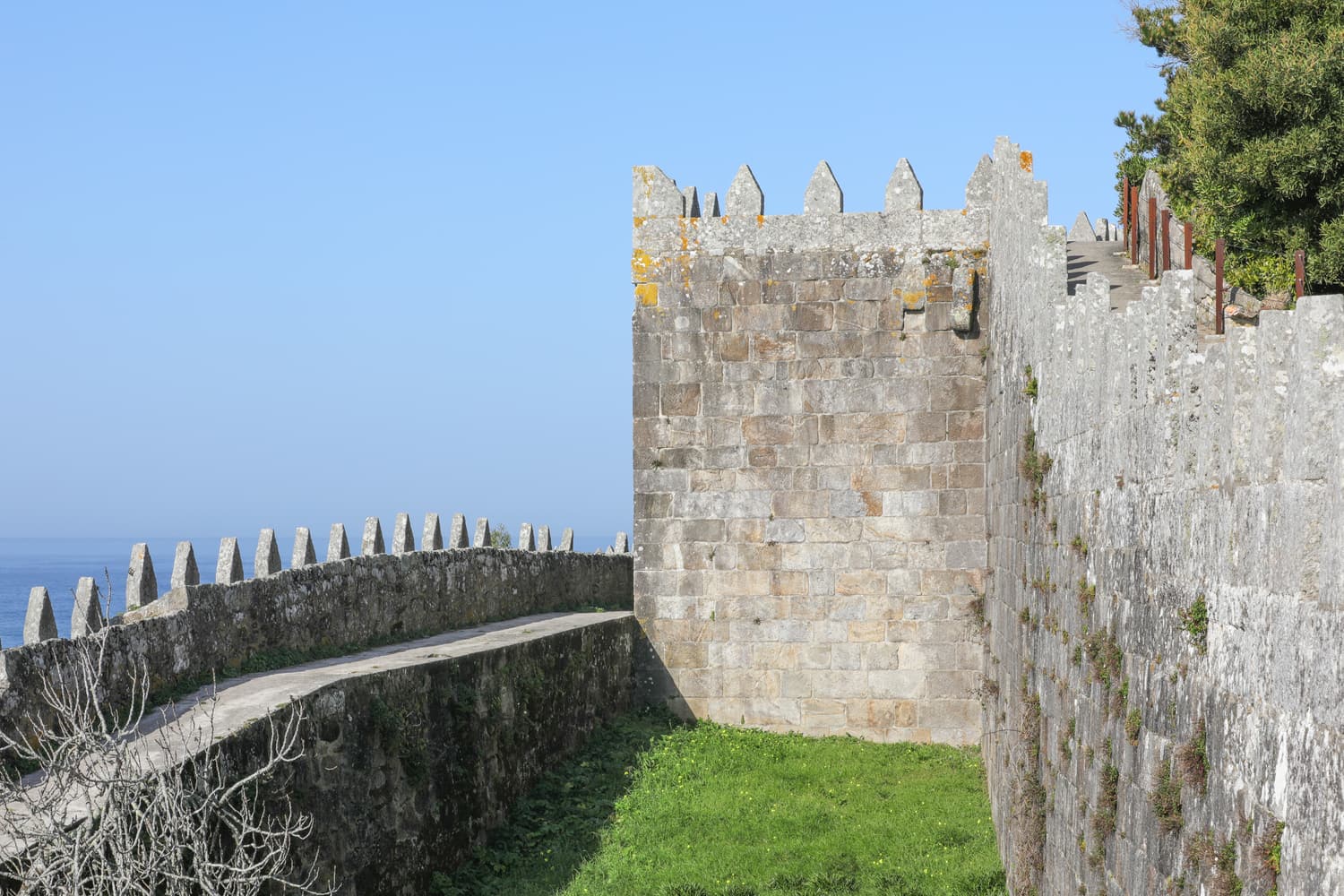
Monterreal Fortress
Three kilometres of walls around a wooded headland
The walled peninsula that closes Baiona’s bay: crenellated ramparts built between the 11th and 17th centuries, three towers, sea on three sides and a Parador hotel inside. The walk along the walls is the single best thing to do in town.
 Islands & the Atlantic coast
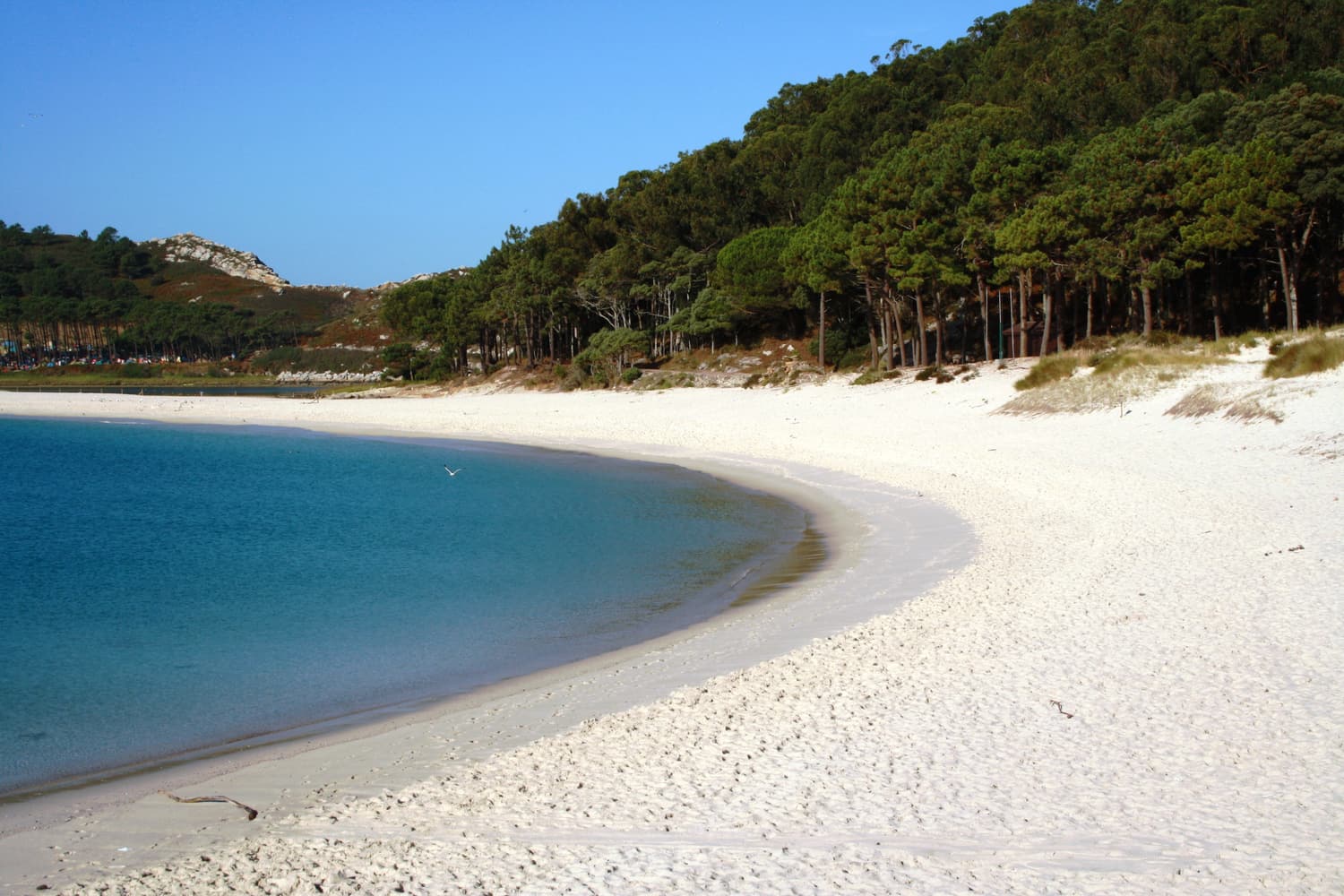
Cíes Islands
A national park with a Caribbean-white beach
Three uninhabited islands at the mouth of the Ría de Vigo, part of the Atlantic Islands of Galicia National Park. Rodas beach, clear cold water, marked trails to cliff-top lighthouses — and a daily visitor cap that means you must plan ahead in summer.
 In Baiona
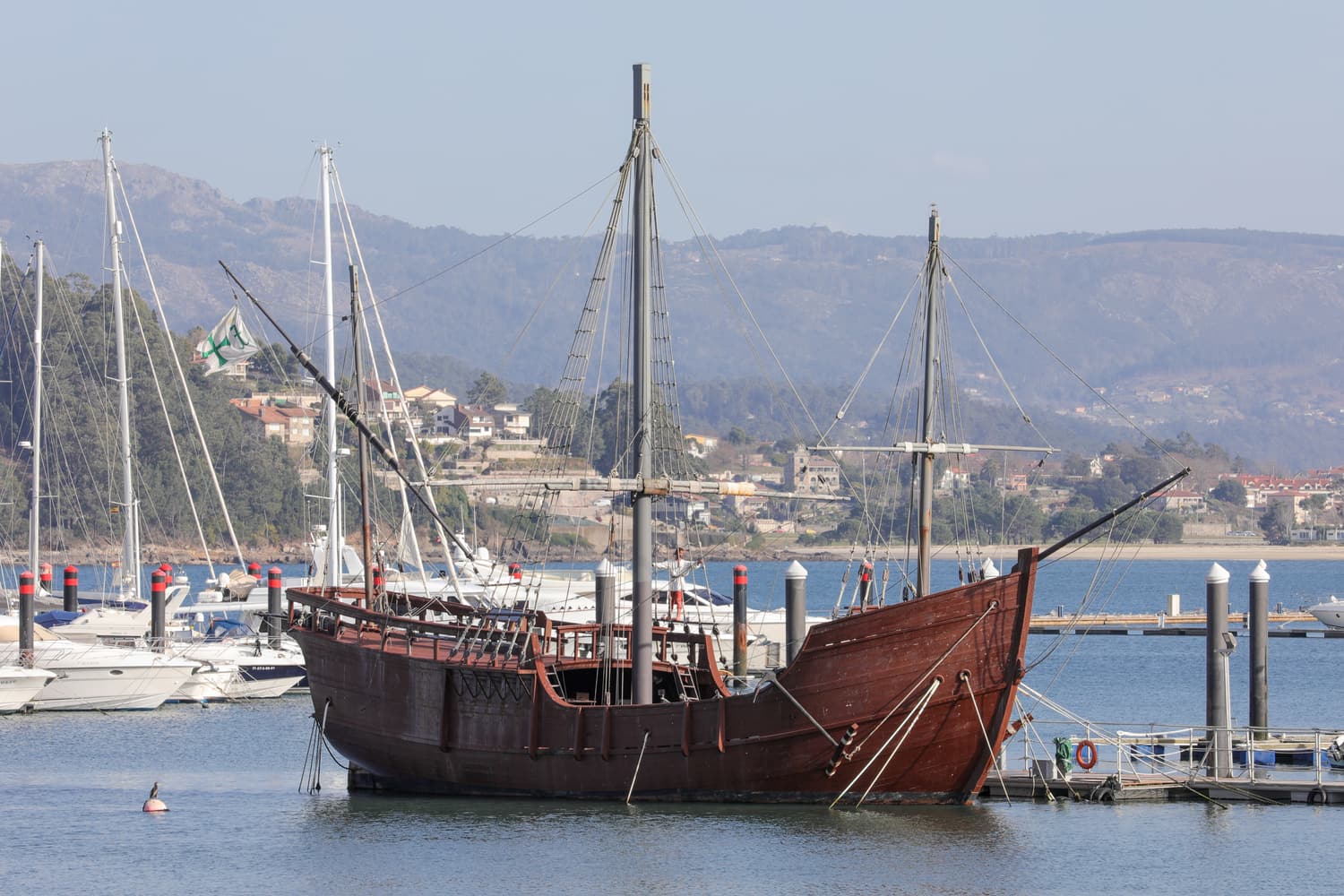
The Caravel La Pinta
Where Europe first heard of the Americas
On 1 March 1493 the caravel La Pinta sailed into Baiona with the first news of Columbus’s voyage. A full-size replica floats in the harbour as a small museum, and each March the town re-enacts the arrival in the Festa da Arribada.
 In Baiona
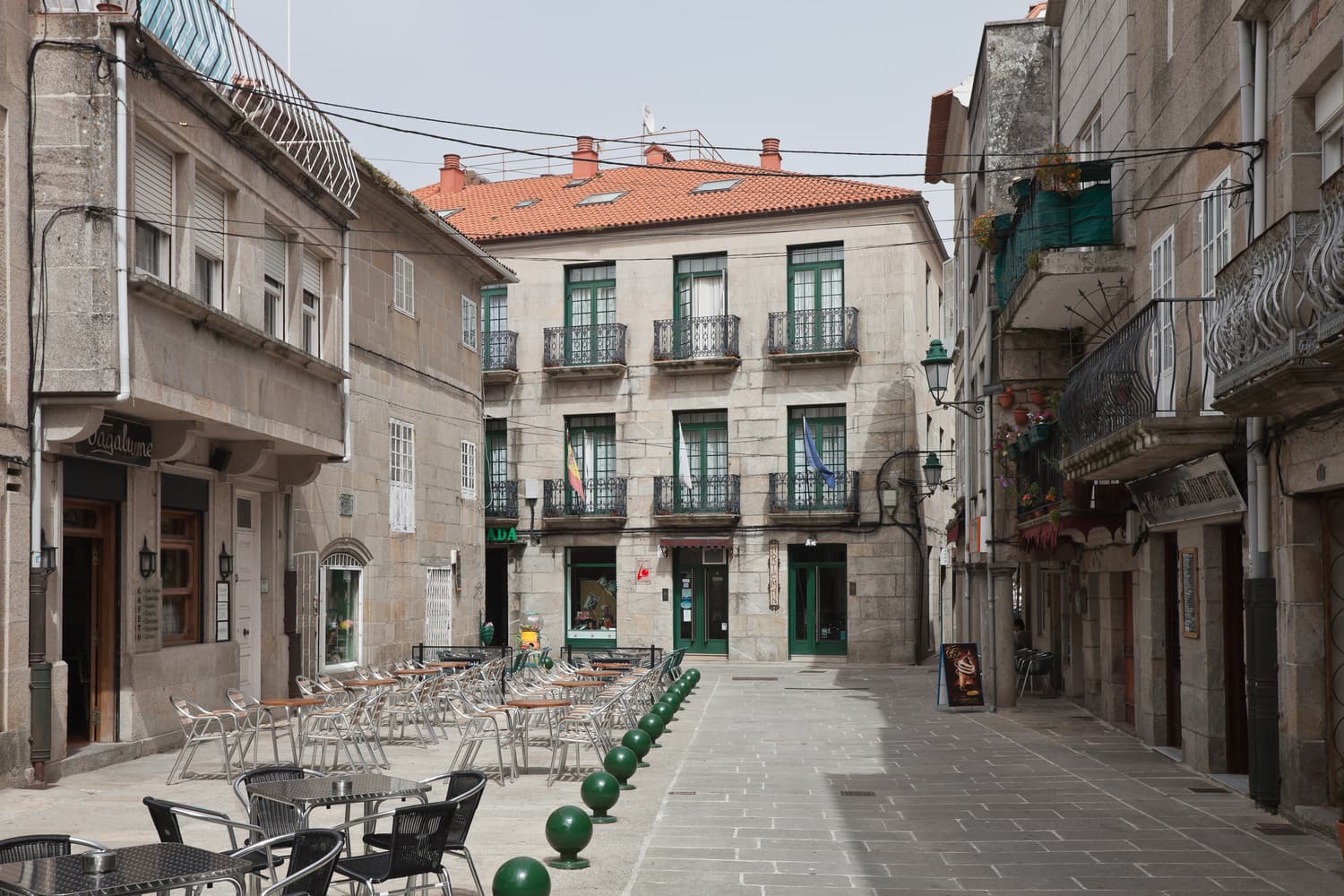
Baiona Old Town
Granite lanes, arcades and a giant Virgin on the hill
A compact historic quarter of stone houses, glazed balconies and seafood taverns behind the harbour, with a Romanesque collegiate church, the chapel of Santa Liberata and, on the hill above, the 15-metre granite statue of the Virxe da Roca.
Food and drink
You are in one of the best places in Europe to eat shellfish. Things to look for:
- Percebes — goose barnacles, prised off the wave-battered rocks of this very coast by percebeiros. Boiled briefly in seawater, eaten with your fingers. Expensive, and worth trying once.
- Navajas — razor clams, grilled on the plancha with garlic and parsley.
- Polbo á feira — octopus with olive oil, paprika and coarse salt, on a wooden plate.
- Mussels, clams, crab and lobster — mussels from the rafts in the ría; lobster is the speciality of A Guarda.
- Empanada — a flat pie filled with tuna, cockles or scallops.
- Albariño — the crisp, aromatic white of the Rías Baixas appellation. The O Rosal subzone, just south of Baiona, blends Albariño with Loureiro and other local grapes.
Lunch is the main meal, from about 1.30 pm; dinner starts late. In summer, book for the popular restaurants in the old town. See the winery visits and food tours you can book.
The Camino in Baiona
The Camino Portugués da Costa runs straight through town, and from spring to autumn you will share the seafront with pilgrims carrying scallop shells. Even if you are not walking to Santiago, the stage south towards Oia and the stage east to the bridge at A Ramallosa make fine day walks.
Festivals
- Festa da Arribada — first weekend of March: a huge medieval fair celebrating the arrival of La Pinta.
- Curros in the Serra da Groba — late spring and early summer Sundays: the round-ups of the wild horses. Dates vary each year.
- Summer festivities — August brings the town’s main fiestas and its busiest weeks.
Money, language and practicalities
- Currency: the euro. Cards are widely accepted; carry some cash for small bars, markets and entrance fees.
- Language: Galician and Spanish are both official. English is spoken in hotels and by tour guides, less so in small bars. Place names appear in Galician — praia for beach, rúa for street.
- Time: Central European Time. Portugal, just across the Miño, is one hour behind.
- Tipping: not expected; rounding up or leaving a few coins is appreciated.
- Water: tap water is safe to drink.
- Emergencies: dial 112.
Safety
Baiona is a very safe town. The real hazards are natural: the open coast south of the fortress has powerful swell and slippery rocks, so keep well back from the water’s edge; respect the flags on the beaches; and take the Atlantic sun seriously, especially when a breeze hides its strength.
What to pack
- A light waterproof and an extra layer, whatever the month.
- Comfortable shoes for granite paving, ramparts and island trails.
- Sun cream, a hat and swimwear from May to October.
- For the Cíes: water, food, a rubbish bag and something warm for the boat back.
Sample itineraries
Two days. Day one: guided walk, ramparts, the replica of La Pinta, lunch in the old town, an afternoon on the beach and sunset at Cabo Silleiro. Day two: the Cíes Islands.
Four days. Add a day driving the coast to Oia and A Guarda, with Monte Santa Trega and a winery in O Rosal; and a day split between Tui, Valença and Vigo’s old town.